The Best Cat Mommy SVG Vector Design
A Designer’s First Glance: Graceful, Not Gimmicky
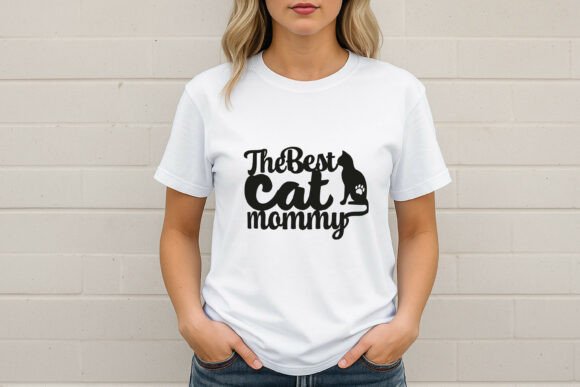
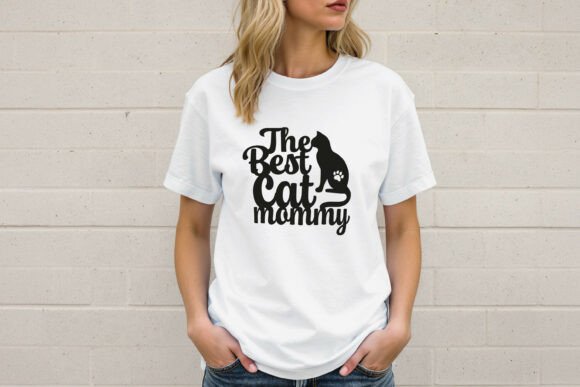
When I opened The Best Cat Mommy SVG Vector Design, what struck me wasn’t cuteness—it was quiet confidence. The cat silhouette flows with clean, continuous curves, and that single paw detail 🐾 lands like a whisper, not a shout. It doesn’t scream “cat lady”—it says “I know my cat, and she knows me.” That subtlety is rare in the Crafts category, where many graphics lean into cartoonish exaggeration or overcrowded text. This one breathes. It feels intentional—not just designed, but considered for how it’ll live on fabric.
Real-World Test: Embroidering It onto a Linen Tote Bag
Last week, I prepped The Best Cat Mommy SVG Vector Design for a custom linen tote bag—part of a small-batch holiday collection for a local boutique. Linen’s slubby texture can swallow delicate lines, so I watched closely during digitizing: the silhouette held its shape, and the paw stayed legible at 3.5 inches wide. No jagged edges. No collapsed corners. The design naturally invites a satin stitch outline around the cat’s curve, while the interior works beautifully as a soft fill stitch—light enough to drape well, dense enough to read clearly from three feet away. Customers who saw the sample didn’t say “cute.” They said, “That’s *my* cat,” and asked about matching pillow covers.
Where It Shines—and Where to Pause
The Best Cat Mommy SVG Vector Design thrives on structured, medium-weight fabrics: cotton twill for aprons, brushed poly-cotton for sweatshirts, midweight canvas for tote bags, and stable quilting cotton for baby blankets or nursery pillows. It translates cleanly into an embroidered patch—especially when backed with tear-away stabilizer and stitched with 40-weight thread for crisp contrast.
But here’s where experience kicks in: avoid using it full-size on stretchy knits (like lightweight t-shirts) without proper cutaway stabilizer and reduced stitch density. On dark fabric, test thread colors first—the paw detail reads best in a tone-on-tone approach (e.g., charcoal gray thread on black fabric) rather than high-contrast white, which can look harsh. And skip curved surfaces like caps unless you’re willing to resize it down to 2.25 inches and simplify the inner fill—those graceful lines don’t forgive distortion.
What It Adds to Your Finished Product—Beyond Aesthetics
This isn’t just another machine embroidery design. It quietly elevates perceived value. Because the layout is balanced—not top-heavy, not cramped—it looks professionally curated, not slapped on. That matters for Etsy sellers pricing handmade products at $48+ for a custom tea towel set, or craft fair vendors selling embroidered kitchen linens. Customers trust simplicity done well. They also recognize intentionality: a mom buying a baby onesie with this design doesn’t see generic clip art—she sees something made *for her world*. That builds repeat business. It also supports brand consistency across product lines: use it on a pillow cover, then echo the same silhouette (scaled down) as a subtle corner motif on a printable mockup for your digital embroidery file listings.
Practical Notes Every Embroidery Designer Should Check
- Always test on scrap fabric first—especially if stitching on textured or loosely woven material. Linen, burlap, and some organic cotton blends need extra stabilizer support.
- Review stitch density before hooping. If the fill area feels overly dense, reduce it slightly—this helps prevent puckering on lightweight fabrics and improves wash durability.
- Confirm hoop size compatibility. This design fits comfortably in a 4×4 hoop at standard scale—but if you’re resizing for a cap or baby onesie, verify clearance in your machine’s throat space.
- Inspect small details at actual stitch size. Zoom in on the paw. Does it hold clarity? Does the negative space between paw pads stay open? If not, adjust underlay or reduce density there.
- Test black-and-white mockups before finalizing color palettes. This design relies on shape and proportion—not color—to communicate, so grayscale previews reveal whether it reads strongly enough.
- Check licensing terms before commercial use. As a Graphics asset, confirm whether resale of finished embroidered items is permitted—and whether attribution or license renewal applies for digital product sellers.
Not Just for “Cat Moms”—A Versatile Craft Business Asset
I’ve used The Best Cat Mommy SVG Vector Design in ways its title doesn’t hint at: scaled down and stitched in metallic thread on a bridal shower napkin set; simplified into a running-stitch outline for a minimalist baby bib; layered beneath sheer organza for a delicate nursery wall hanging. Its strength lies in adaptability—not trend-chasing. For small shop owners building cohesive collections, it functions as both a hero design and a supporting motif. For apparel decorators, it’s a reliable anchor piece—pair it with a simple script font for names, or leave it solo for quiet impact. And for digital product sellers, it performs exceptionally well in printable mockups: clean lines render sharply, and the vector origin means no pixelation when zoomed for social media previews.
Final Thought: Design That Serves the Maker—and the Moment
In a market flooded with fast, forgettable graphics, The Best Cat Mommy SVG Vector Design stands out by honoring restraint. It doesn’t ask for attention—it earns it. Whether you’re stitching a last-minute holiday gift, launching a new line of embroidered home goods, or curating digital embroidery file bundles for fellow Etsy sellers, this design delivers consistent, confident results. It’s the kind of asset that makes clients say, “I didn’t know I needed this—until I saw it stitched.” And that, for any creative entrepreneur, is the highest compliment.