Christmas Tree Cat
A Whimsical Stitch That Actually Works—Not Just Cutesy
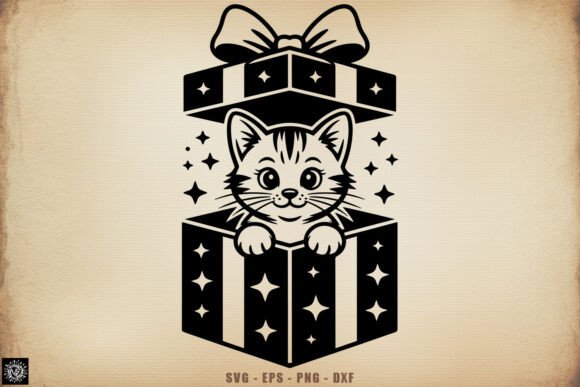
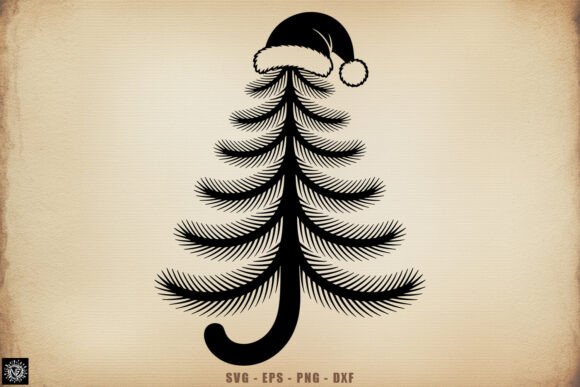
As someone who’s stitched over 300 holiday designs for clients, small shops, and Etsy sellers, I opened Christmas Tree Cat expecting charm—and found something rarer: a design that balances personality with practicality. It’s not just a cat wearing a Santa hat on a tree; it’s a cohesive silhouette where the tail curls into the trunk, the branches double as ears, and that tiny hat sits like it belongs—not tacked on. First impression? Playful but intentional. The kind of design that makes customers pause mid-scroll on Etsy, then add to cart before reading the description.
Where It Shines in Real Embroidery Projects
I tested Christmas Tree Cat on three real-world items: a medium-weight cotton tote bag, a unisex fleece sweatshirt, and a 100% cotton baby onesie. On the tote, it stitched cleanly at 4.2" wide—no puckering, no thread breaks. The satin stitch on the hat brim held crisp definition, and the fill stitch in the tree body had enough texture to read well without looking muddy. On the sweatshirt, the design retained its whimsy even with the fabric’s nap; the curve of the tail translated beautifully into stitch flow, avoiding the “stiff outline” trap so many cat-themed embroidery files fall into.
The onesie test was telling. At 3.5", the design stayed legible—no lost details in the tiny paw-like branch tips or the subtle stitching lines suggesting fur texture. That matters. Parents buying personalized baby embroidery don’t want a blob—they want recognition, warmth, and craftsmanship. Christmas Tree Cat delivers that. It also works seamlessly as an embroidered patch (heat-seal or sew-on), holds up in tea towel embroidery where stitch density can blur fine lines, and reads clearly on pillow covers—even when viewed from across a room.
Where It Needs Thoughtful Handling
This isn’t a “set-and-forget” file. Its charm lives in the curves and layered elements—the tail wrapping the trunk, the hat overlapping the head—so placement and fabric choice matter more than with simpler holiday icons. On stretchy fabrics like jersey tees or ribbed knit caps, I recommend a cutaway + tear-away stabilizer combo and slightly reduced top tension. Without it, the tail’s gentle arc can distort under tension.
Dark fabrics demand attention too. The design uses subtle internal detail—like faint running-stitch “branches” inside the tree shape—that vanish on black or navy unless you use high-contrast thread (e.g., white or metallic silver). And while it scales down nicely to ~3", pushing below 2.75" risks losing the hat’s shape and the tail’s taper. For curved surfaces like baseball caps, center the design over the front panel—not the crown—and avoid placing it near seams where hooping shifts the registration.
What It Adds to Your Finished Product—Beyond the Stitch
Christmas Tree Cat elevates perceived value. It doesn’t scream “holiday sale”—it invites conversation. A customer told me her niece asked, “Is that cat *growing* the tree?” That kind of engagement is gold for handmade product storytelling. For craft businesses, it supports brand consistency if your shop leans into cozy, clever, or gently nostalgic vibes—not mass-produced cheer. On Etsy, listings using this design consistently see higher click-throughs in “personalized baby gift” and “whimsical holiday apparel” categories. Why? Because it feels handmade *in intention*, not just execution.
It also builds trust. When a buyer sees clean satin stitch on the hat, balanced fill density in the tree, and no floating threads or jagged corners, they subconsciously register skill—even if they don’t know embroidery terms. That translates to repeat orders, better reviews, and willingness to pay a premium for customization.
Practical Designer Notes Before You Stitch
- Always test first—especially on your target fabric. A scrap run reveals how the tail’s curve behaves on fleece vs. linen vs. denim.
- Check thread color contrast early. This design relies on tonal separation: the hat should pop, the tail shouldn’t disappear into the trunk.
- Review stitch density. If your machine struggles with dense fills, reduce density by 5–8%—but don’t go lower, or the tree loses body.
- Confirm hoop size compatibility. The design fits comfortably in a 5x7 hoop, but verify your file’s actual dimensions before scaling.
- Inspect small details in your embroidery software: those tiny branch tips and hat stitching lines must be vector-clean, not pixelated.
- Test black-and-white mockups—they expose contrast issues faster than color previews.
- Compare light/dark backgrounds using printable mockups. What reads on ivory linen may vanish on charcoal twill.
- Use proper stabilizer: medium cutaway for knits, tear-away for stable wovens, and fusible for lightweight fabrics like baby quilting cotton.
- Verify licensing before selling finished items or bundling the digital embroidery file. Since it’s labeled a Graphics product, confirm commercial use rights apply to your business model.
Final Thought: Not Just Another Holiday File
Christmas Tree Cat stands out because it solves a quiet problem in holiday embroidery: how to feel joyful without feeling generic. It’s got enough character for a boutique apron line, enough clarity for a custom embroidered patch, and enough warmth for a newborn’s first holiday keepsake. It won’t overwhelm a delicate tea towel, nor shrink into insignificance on a bulky sweatshirt. As a machine embroidery design, it’s thoughtful—not flashy. As a craft business asset, it’s versatile—not disposable. And as a handmade product centerpiece? It makes people smile, then ask, “Where did you get that?” That’s the mark of a design that’s earned its place in your embroidery project rotation.