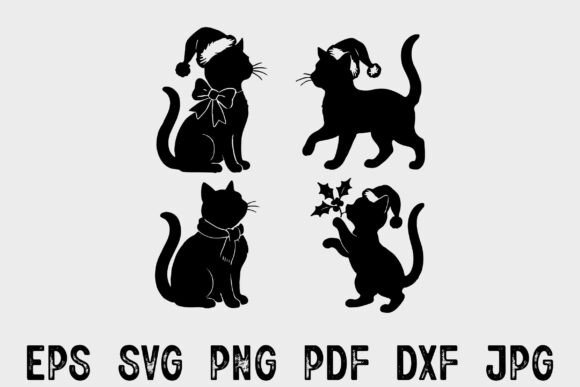
Vintage Christmas Cats Silhouette
A Designer’s First Glance: Charm with Quiet Confidence
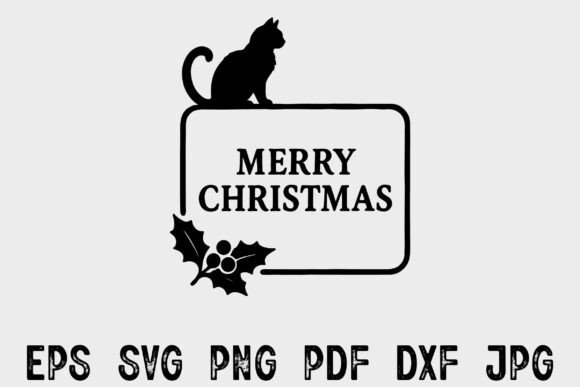
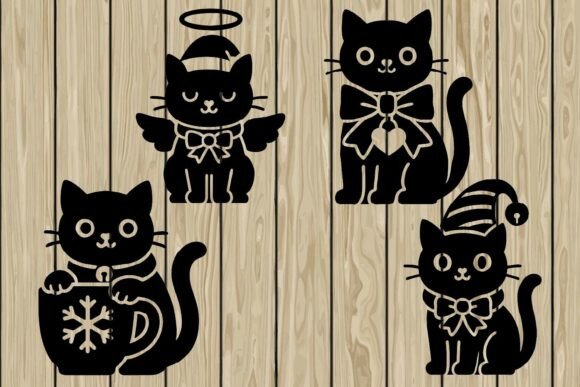
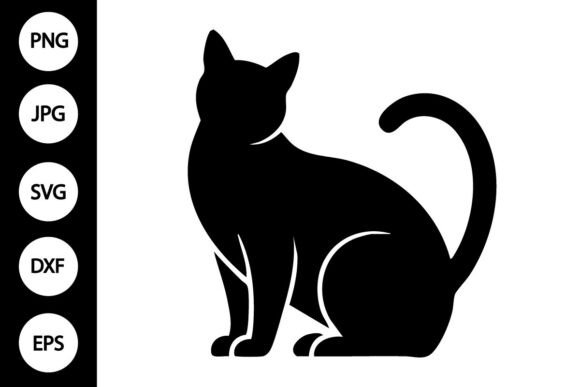
When Vintage Christmas Cats Silhouette opened on my screen, I didn’t see just another holiday graphic—I saw a quiet, confident mood. The cats are posed with gentle symmetry—paws tucked, tails curled, ears perked—framed by subtle holly sprigs and soft scalloped edges. It’s not busy. Not cutesy. Not overly ornate. It’s nostalgic, like a well-loved vintage postcard found in an attic drawer. That kind of restraint is rare—and valuable—for embroidery designers who know that less often stitches cleaner, reads clearer, and sells better.
Where This Design Lives Best (and Why)
I recently used Vintage Christmas Cats Silhouette to develop a small-batch line of embroidered canvas tote bags for a local boutique’s holiday pop-up. The design landed perfectly at 4.2 inches wide—centered on the front panel, stitched in matte black thread on natural oat linen. Customers paused. Smiled. Asked, “Are those *real* vintage cats?” That’s the power of intentional simplicity: it invites curiosity without shouting.
This design shines on:
- Sweatshirt embroidery—its clean outer lines hold up beautifully on fleece-backed knits when paired with medium-weight cutaway stabilizer;
- Baby embroidery—think onesies or burp cloths where delicate scale and low stitch density prevent stiffness;
- Embroidered patches—the silhouette format lends itself naturally to clean edge finishing and iron-on backing;
- Kitchen towels and tea towels—the balanced negative space ensures readability even after repeated washing;
- Holiday gifts and personalized products—it feels handmade, not mass-produced, which builds trust with gift buyers.
It also works well as a digital embroidery file for Etsy sellers building seasonal collections—especially those curating cohesive, story-driven themes (e.g., “Quiet Holiday,” “Nursery Traditions,” or “Small Shop Charm”).
Where Caution Is Needed—Not Flaws, Just Realities
Like any thoughtful machine embroidery design, Vintage Christmas Cats Silhouette has natural boundaries—not weaknesses, but parameters that matter in real-world use.
First: small hoop sizes. At its smallest recommended size (roughly 2.8"), fine details—like the inner curve of an ear or the tip of a holly leaf—can blur if stitch density isn’t adjusted. I tested it on a 3" hoop with lightweight cotton poplin and added one extra pass of stabilizer underneath; the result was crisp, but only because I slowed the machine speed and verified thread tension.
Second: textured or stretchy fabric. On ribbed knit sweatshirts, I avoided placing it over seams or side panels. Instead, I centered it on the chest—flat, stable, and easy to hoop. On jersey baby onesies? I switched to a tear-away + topping combo and reduced fill stitch density by 15% to keep the fabric supple.
Third: dark fabric and contrast. The silhouette relies on shape—not color—for impact. On charcoal or navy, I recommend testing both matte black and cream thread. Black reads bold and classic; cream adds warmth and vintage softness—but only if your stabilizer fully supports the underlay. Skip glossy or metallic threads here—they distract from the design’s quiet personality.
What It Adds to Your Finished Product (Beyond Aesthetics)
Using Vintage Christmas Cats Silhouette doesn’t just decorate—it elevates perception. On a handmade apron sold at a craft fair, it signaled care and intention—not just “I sewed this,” but “I chose something meaningful.” For an Etsy seller listing personalized holiday stockings, it gave buyers confidence: no clashing fonts, no pixelated edges, no visual noise. That translates directly to fewer returns, more repeat customers, and stronger brand consistency across listings and printable mockups.
It also supports professionalism quietly. Because it’s a clean applique design-ready outline (no dense satin borders or overlapping fills), it stitches reliably across machines—from entry-level Brother models to high-end Tajimas—so you’re not troubleshooting mid-run. And because it avoids tiny lettering or micro-details, it holds up through commercial embroidery production without constant re-hooping or thread breaks.
Practical Notes Every Embroidery Designer Should Run Through
Before stitching your first Vintage Christmas Cats Silhouette project, do these five things:
- Test on scrap fabric—same type, same color, same stabilizer combo you’ll use for the final piece;
- Check thread color contrast in natural light *and* under store lighting (especially important for boutique or craft fair displays);
- Review stitch density in your embroidery software—look for tight fill areas near the cats’ paws or holly berries; reduce if needed;
- Confirm hoop size compatibility—if your smallest hoop is 4", don’t force a 2.5" version unless you’ve tested stabilization thoroughly;
- Verify licensing—since this is listed as a Graphics product in the Crafts category, confirm whether commercial use (e.g., selling finished embroidered totes) is permitted before listing on Etsy or wholesale platforms.
The Bottom Line for Creative Entrepreneurs
Vintage Christmas Cats Silhouette isn’t flashy. It won’t trend on TikTok overnight. But it’s the kind of embroidery project asset that builds quiet momentum: a bestseller in a holiday collection, a signature detail on a baby gift set, a trusted go-to for clients who value authenticity over algorithm-chasing.
It fits seamlessly into a craft business that values clarity, cohesion, and care—whether you’re embroidering one custom pillow cover or producing 200 embroidered sweatshirts for a small shop launch. Used thoughtfully, it doesn’t just sit on fabric—it settles into memory. And in handmade markets, that’s how loyalty begins.