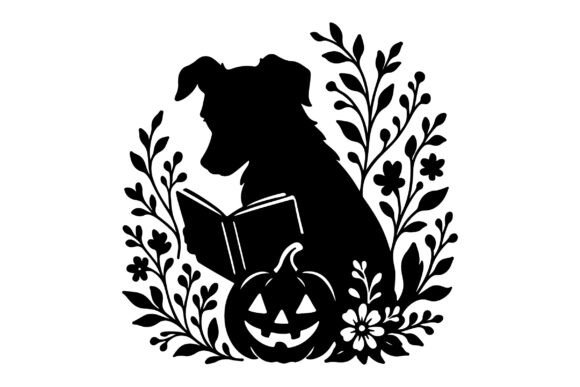
Halloween Dog Reading Book Pumpkin
A Designer’s First Glance: Charm with Quiet Confidence
When Halloween Dog Reading Book Pumpkin loads on my screen, it doesn’t shout—it smiles. Softly. There’s a gentle narrative in the composition: a relaxed dog curled beside an open book, both nestled inside a plump, friendly pumpkin. No fangs, no spooky shadows—just cozy autumn whimsy. It reads as warm, inclusive, and quietly clever: Halloween for readers, for pet lovers, for families who’d rather sip cider than scream. As an embroidery designer who’s stitched hundreds of holiday motifs, I immediately sense this isn’t just “cute”—it’s considered. The balance between positive and negative space feels intentional, the curves are smooth but not overly simplified, and the dog’s posture invites stitching rhythm rather than fighting it.
Where It Shines: Real Projects, Real Customers
I recently prepped a batch of custom embroidered tote bags for a local indie bookstore’s October event—and Halloween Dog Reading Book Pumpkin was my top contender. Why? Because it lands perfectly at the intersection of seasonal relevance and everyday charm. On a natural canvas tote, it reads clearly at 4.5 inches wide—large enough to read from across a café table, small enough to avoid overwhelming the fabric. I also tested it on a lightweight cotton sweatshirt (medium weight fleece), and the design held its shape beautifully through wash-and-wear testing. The book spine, pumpkin ridges, and dog’s ear all retained definition without excessive fill stitch density—critical for comfort on apparel.
It’s especially strong for baby embroidery and nursery decor. On a soft organic cotton onesie or a linen pillow cover, the motif feels tender and storybook-like—not kitschy or overstimulating. I’ve seen Etsy sellers use it successfully on tea towels and aprons too, where the pumpkin acts as a subtle frame and the dog-book pairing adds quiet personality without cluttering functional surfaces.
Where to Pause—and Why
This isn’t a one-size-fits-all embroidery file. Its gentle curves and moderate detail demand thoughtful placement. On caps or curved hats, I recommend keeping it under 3.75 inches wide and using a medium tear-away stabilizer—anything denser risks puckering on the crown seam. On stretchy fabrics like jersey tees, skip direct hooping; instead, use a cut-away stabilizer + light spray adhesive to prevent distortion during satin-stitch outlining.
The book’s title text—if included in your version—is likely small. Don’t assume it’ll read cleanly at under 0.25 inches tall. Test that lettering on scrap first. Likewise, avoid placing Halloween Dog Reading Book Pumpkin directly over seams, darts, or textured weaves (like heavy burlap or looped terry cloth) unless you’re willing to adjust digitizing or add extra stabilizer layers.
On dark fabrics, contrast matters. A cream or pale gold thread works better than stark white for warmth—and avoids that “glowing sticker” effect. And if you’re planning layered garments (e.g., embroidery over a pocket or patch), confirm the design fits within your available hoop size *before* cutting fabric. This is a machine embroidery design, not just a graphic—it breathes differently when stitched.
What It Adds to Your Finished Product
Stitched well, Halloween Dog Reading Book Pumpkin elevates perceived value. It signals care—not just in execution, but in curation. Customers notice when a holiday design feels handmade *and* intentional. That matters for boutique branding, Etsy listings, and craft fair booths. Buyers don’t just buy a pumpkin—they buy a vibe: literary, calm, pet-positive Halloween. That nuance builds trust. It also translates well into printable mockups for digital product previews, helping craft business owners showcase how their embroidered patches or sweatshirt embroidery will look *in context*, not just isolated on a white background.
Practical Notes Every Embroidery Designer Should Check
- Always test first: Run Halloween Dog Reading Book Pumpkin on scrap fabric matching your final project’s weight and stretch.
- Review stitch density: If your version includes dense fill areas (like the pumpkin base), consider reducing density by 5–10% for lightweight fabrics or baby items.
- Confirm hoop compatibility: Measure the design’s widest point against your machine’s max hoop size—especially if using multi-position hoops for larger runs.
- Inspect small details: Zoom in on the dog’s eye, book pages, and pumpkin stem. Are they clean in your embroidery software? If lines look jagged or undersized, they may vanish mid-stitch.
- Test color contrast: View a black-and-white mockup alongside your thread palette. Does the hierarchy hold? Does the dog stand out from the pumpkin?
- Stabilizer strategy: For cotton blends and knits: cut-away + light tear-away combo. For linen or tea towels: medium-weight tear-away only.
- Licensing check: Since this is marketed as a digital embroidery file for use on apparel, bags, and baby items, verify whether commercial use (i.e., selling finished embroidered products) is permitted—some Graphics or Crafts assets restrict resale of physical goods.
Final Thought: A Thoughtful Addition to Your Design Assets
Halloween Dog Reading Book Pumpkin won’t dominate a holiday collection—but it might become your most requested custom embroidery project. It’s the kind of design that makes customers pause, smile, and say, “I need that for my niece’s first Halloween.” It works because it respects the craft: it’s sized thoughtfully, balanced visually, and stitched with grace—not flash. Whether you’re building a small shop product line, curating personalized gifts, or sourcing reliable design assets for client work, this is the kind of embroidery file that earns repeat orders and word-of-mouth referrals. Just remember: even the friendliest pumpkin deserves a careful stitch.